Thursday, January 31, 2013

Am I Interesting enough?


My toy cybermen about to eliminate my lunch.


I notice I’ve been more or less avoiding the subject of writing when posting on this blog. I always feel guilty spending time writing on the blog when I don’t have a current writing project to which I can devote myself. And f course, I’m self-employed, so there should always be projects to which I can devote myself.

That situation hasn’t changed. Yesterday I walked into the big converted warehouse, now called home by my publisher with an identity crisis, Random House Penguin Pearson. I dropped in my latest manuscript, with a covering letter to head-of-publishing-for-young-adults, Laura Harris. The letter explained that I’m unsure about the manuscript, even though Laura has already read an earlier draft and claims to be a fan. When I started this blog I was virtually unknown as a writer of YA books, though I had good TV creds. Since then, my last two books (The Life of a Teenage Body-snatcher and The Shiny Guys) have appeared on a few shortlists and books in my backlist are getting some attention, which is very gratifying. People are writing nice things on Goodreads about I’m Being Stalked by a Moonshadow, The Clockwork Forest and Siggy and Amber. So, yes, I’ve started self-googling, and I haven’t found anything too toxic so far. People are more likely to be insulting and damning about my TV work. For my book work I’ve been called Gaimanesque once or twice, which is a sweet compliment. I saw Neil Gaiman when he last appeared at The Atheneum Theatre in January, 2013. It was more like a rock concert than a ‘reading’. Though he did read very well. It was an excerpt from his latest book, The Ocean at the End of the Lane. Neil is the god of geek chic and I felt out of place, there in the Atheneum five rows from the front, dressed in my St Kilda black and not wearing a Doctor Who teeshirt, which seems the latest must-have fashion statement in geekdom. I haven't even read Sandman, for Christ'ssake.


Me in my St Kilda black, probably not looking all that out of place at a Gaiman event.

I actually did once own a Doctor Who teeshirt, way back when Tom Baker was the timelord and the show was remarkably good. I’m not sure if I ever wore it. And I must have something of the geek about me because my friend Robert went to great effort when last in London to get me some toy cybermen from the famous science fiction shop, Forbidden Planet , where the first signings of The Hitchhiker’s Guide to the Galaxy took place. The next cybermen story in Doctor Who is to be written by Neil Gaiman. The fans hold out high hopes. Gaiman spoiled us rotten with his story The Doctor’s Wife, which is treated as reverently as the fantastic Blink episode that Steven Moffat wrote, where we were all terrified by weeping stone angels that could ‘get you’  merely by looking at you, if you blinked.


Neil Gaiman not blinking and also looking very St Kilda.

I like being favourably compared with Gaiman. He’s hugely successful, he writes the sort of books I’d like to write, and he makes it all seem like such tremendous fun. And his hair is like mine: not awfullly good. I’d be lying if I said that I find writing fun. It’s a love/hate relationship. If I’m writing well and on a roll, then I obviously love writing. If I’m bothered by writer’s block, which Gaiman never is, then I hate my chosen career and wish I’d stayed at university a bit longer. (Though I think I would have been unhappier as a lawyer than a sporadic writer.) I should qualify my support for Gaiman. I was very happy with Neverwhere, Stardust and The Graveyard Book but I really didn’t like the big one that I’m supposed to like – American Gods. I just didn’t think it was interesting enough. I did like the story at the end, about the car on the ice and the terrible secret in its trunk - but I had to read six hundred pages to get to this part. That’s a hell of a long prologue. I ended up disliking the book because everyone had been so complimentary and convinced I would like it. How dare it bore me! And boring someone is about the worst thing you can do as an author. My recent self-googling has revealed a criticism that quite a few people make about my books. Apparently I don’t plot well, with the result that I can get a bit boring, even if I’m funny. (People seem generally to agree on that, which comes as some relief. If you don’t get any laughs out if The Life of a Teenage Body-snatcher then there is really no reason to read it. The prose is only just okay and the historical stuff is not new or revealing. The support characters are generally clowns, there to provide the comic relief you may require after wading through a cold stew of human heads.)

TV producer Tony Cavanaugh once had the good taste to plan a drama series built around Shaun Micallef as an amateur sleuth. I like Shaun and it was a pleasure to workshop some story ideas with Shaun, Tony and also, for some reason, Craig McLachlan. I’m not sure if Craig was to be involved but he was his usual larrikin self, and provided a nice foil for Shaun’s more cerebral sense of humour. I was contracted to write the pilot episode, which was to be a telemovie. It was to be called The Crime Show, a deliberately prosaic title that Shaun perversely liked for that very reason. It was pleasant writing for Tony. He took me to nice restaurants and showed me his boat and his amazing house on the river in Noosa. In an effort to get my head around the whole crime genre, I read as much crime fiction as I could, and started developing a real respect for the writer Robert Crais, who plotted his books so well that I forgave him for overusing certain words, such as ‘perp’. Though when I learned about this piece of police jargon, I also gave the word a bit of a hammering in my telemovie script. I tried to include all the stuff we had talked about in the writing workshops, but still the script seemed less than the requisite two hours running time. So I added big physical comedy moments for Shaun’s character and also for his offsider, who would be played, I was told, by Rebecca Gibney.

The script took me a few weeks to finish. I was pretty happy with it. We had a reading with Shaun, who laughed in the right places. Shaun has very definite ideas about what is funny and what isn’t, and he's usually right. I trust Shaun’s judgment thoroughly. I was once the creative producer of a TV sketch comedy series called Full Frontal. We used to show all our material – recorded and live – to a studio audience on Friday night.  Often I didn’t have a full live night. THere would be some time to fill, or the show might run short. On Thursday afternoon I would ring Shaun and ask him, basically, ‘What have you got? I’ll do it.’ I mention this because Shaun has been telling a story lately about how I apparently rejected all thirty of the sketches that he submitted to me on his first week as a Full Frontal writer. And he’s been saying that the first series of his fantastic ABC show consisted mainly of sketches that I’d rejected from Full Frontal. I also produced the ABC series and I know for a fact that this is untrue. But I was the gatekeeper on Full Frontal and I had a terrible reputation for sending sketches back to writers if I thought they needed more work or weren’t funny enough. I don’t recall much about those thirty sketches that I had apparently rejected on submission from Shaun, but I do recall a few of them were about the movie Greystoke, which was old then. I just couldn’t see the Full Frontal audience getting excited about a parody of a movie that had come out five years ago, and that they quite likely didn’t see because it was arthouse and Adam Sandler wasn’t in it. Anyway, the fact that Shaun laughed at a few of the lines in my script was encouraging.  Coincidentally, a TV series where Shaun plays an amateur sleuth is being masde for Channel Ten this year. Pure coicidence, as I say. I was at some of the writers meetings for it. But I found that trying to write crime fiction when you’ve had a stroke is about as sensible as bungy-jumping when your retinas are slightly detached.  I bowed out as gracefully as possible (not very, when you've had a stroke) and I hope no one was too pissed off. I think it will be a good show.

Meanwhile, my TV movie script for The Crime Show was handed around to various readers for their thoughts. Themost constructive feedback I got was from Mike Bullen, the English writer who penned the funny and arresting TV drama series Cold Feet. Mike Bullen was pretty damning about my work. He said that the story simply wasn’t interesting enough. There were some good hero scenes and plenty of jokey dialogue – but that simply wasn’t enough to keep a viewer committed. And Mike was right, of course. The script I’d written was formulaic, based on other people’s stories and books I had read. It wasn’t gripping like Breaking Bad, a show with clever plotting that kept me rivetted for four series. Breaking Bad was always interesting.

But I had to concede, The Crime Show really wasn’t the most interesting
two hours of telly ever penned. It didn’t go ahead, which might have been a blessing, or we might have fixed up the ‘lack of interest’ problem as we produced the show, but that hardly ever happens.

Which brings me all the way back to the manuscript I submitted to Penguin this week. We’ll call it Bondi Tigers. There’s no fantasy in it, no clockwork forests that eat people, or grave-robbers with impeccable manners. It’s my usual boy meets girl, boy loses girl, boy gets girl back plot. And I confess I’m worried that someone might notice I’ve written this book twice already. It’s basically the plot of I’m Being Stalked by a Moonshadow and also Siggy and Amber. You just hope that the comedy and new characters (although even some of those are left over from Siggy and Amber)will be enough to keep the reader beguiled – and there really are an awful lot of jokes. That’s a criticism that I’m sure will be levelled at the book, that it’s far too flippant. I’d argue that one of the themes of the book is how comedy both unites and divides us. It’s the only subject about which I feel I can write with any authority. But is that interesting enough? With The Shiny Guys I got tired of making gags and decided to take the world seriously for once. I was surprised that people warmed to it as much as they did. Maybe it was interesting? I did a fair bit of research to write it, even having a psychiatric nurse show me the ECT machine in his ward and how it worked. I wasn’t going to use the Ken Kesey ‘Cuckoo’s nest’ rendition of the ECT machine sequence, because I knew that was heavily biased and basically wrong. Besides, it also belonged to someone else.

Robert McKee is something of a legend in filmwriting circles. He wrote a book called Story, which is a sort of bible for scriptwriters. Many consult it when they are stuck with a story that isn’tr working. McKee is so famous he even appears as a character in Charles Kaufmann’s quirky movie Adaptation. McKee writes that one should never start writing a script until the research has been done and an interesting story has been envisaged.

So far, most of the research I have done for my novels has been a sort of strip-mining operation, where I recycle parts of my own teen life and turn them into novels. But is this interesting enough? There are at least two ourtrageous scenes in Bondi Tigers which occurred in my own life. One of them involves an explosion. Reader, I’m not asbsolutely sure I’m going to get away with it this time. I’ll keep you posted, and just hope that the good people at Penguin Random House Pearson Insert Name don’t read my blog.


It's hard not to like these guys, which are almost as cool as the anonymous commenter who thinks I might just be interesting enough.


Sunday, January 20, 2013

While I was visiting the stinking corpse lily ...


We were burgled over Christmas. They got my computer, an old iMac. Of all the things in the house this was the most valuable to me. I’d backed up most of the important documents, such as a couple of manuscripts for novels (both in first or second draft – a long way off my daring to submit to publishers). Friends helped me out, producing some soft copies of my work that I had sent them for one reason or another. There were a few photos I would have preferred not to lose. The burglary was committed so quickly, while we were away looking at the giant stinking corpse lily (see above, and she really doesn't smell that bad)at the Botanical Gardens. I was sure the burglar must have been close by, so I started roaming the backstreets of St Kilda, looking for suspicious people. The trouble is, everyone in St Kilda looks suspicious, so I decided to narrow it down to suspicious people carrying or stashing my computer. As I walked through likely thief haunts (I didn’t even discount the children’s adventure playground) I had my hand wrapped around a roll of twenties. All I wanted to do was buy the computer back from the thief. The stuff on the hard drive was priceless to me, but absolutely worthless to anyone else.

It seems the most miserable act of theft is stealing someone’s computer. When the extremely funny comic author David Sedaris was in Melbourne last year, he spoke about a writer’s feeling of despair after having a computer stolen, finishing his speech with a casual, ‘I would never steal anyone’s computer,’ as if he would be prepared to commit other acts of theft but not that one.


The brilliant David Sedaris, who would apparently never steal a computer.

We’re still a bit crim-shy. Every time we return from shopping or visiting giant stinking Sumatran flowers or whatever, we park the car in the driveway and look at that place; the supposedly impenetrable door where the thief/ves managed to get in. It’s not a nice feeling and I figure we’ll probably have it for some time to come. What amazes me is how quickly I ran into the house when I realised we had been burgled, not bothering to worry about if the burglar might still be there, or how he could possibly be intimidated by a tall skinny guy with a speech impediment and a limp, the legacy of the great stroke of 2011. What would I defend myself with? A logie? (They left that, so they obviously have some taste.)

Yesterday morning we did the rounds of all the pawnbrokers on a list provided by St Kilda police. They’re very careful about this list. It is not intended to be incriminating. No one is implying that cash Converters is little more than a fence for stolen goods. Actually, I take that back. I am implying that half the stuff at Cash Converters seems nicked. I had a chat with a staffer at the Chapel Street store, who told me what precautions were in place so that they would never fence stolen goods. None of these precautions seemed terribly reassuring. The staffer pointed to all the security cameras, which I suspect were more about stopping shoplifters from nicking the booty from their shelves, than identifying dodgy sellers. Apparently, the sellers always have to provide photo ID, and we all know how difficult that is. When I was a student at the Victorian College of Arts, and our student cards were issued, my friend Chrissy Best managed to organise a student card for her dog as well. She also got an extra one for herself wearing clown makeup, just in case she happened to be a clown when she was required to produce photo identification. I have it on good authority that the student security I.D. process is now a little tighter at VCA, now part of the Univerity of Melbourne, which is why I now get the Melbourne University magazine. They can keep sending it, it makes me feel smarter.

Pawnbroking is a strange business. The big Cash Converters shops look like supermarkets, only with less stuff you’d even consider buying. Then there are the smaller places, like the pawn shop behind the big car rental place across from the National Theatre in St Kilda. Large-scale car renting and pawn broking seems a strange mix. The place was deserted when I dropped in on Sunday morning and found myself in an office that really looked like the ABC set decoration department had gone a little overboard in their efforts at authenticity. There was stuff everywhere, including many sets of things, such as albums of swapcards, and Elvis figurines – stuff that might have been of huge value to some people, but surely worthless in the modern marketplace. I mean no disrespect to the ABC’s art department, but I always thought that Diver Dan’s shed on Seachange had just a bit too much stuff in it. (There was a very good reason for this. The shed wasn’t actually a set. It was an old storage bay at the back of the ABC building on Horne Street. This was a particularly ingenious idea, and I take my hat off to the art department, for coming up with such a cheap and accessible set.)

Perhaps there's a huge market for Elvis figurines and I'm wrong to turn up my nose at them?

We were insured so I’m now working on a new computer that I don’t particularly like, which is why it has taken me so long to post. Burgling must be a tough job nowadays. Tellies are the size of fridges and dirt cheap at JB Hifi, which is probably a little more reputable than Cash Converters. Electrical goods are dirt cheap, thanks to the globalisation that enables us to exploit countries like China and South Korea. Perhaps this lack of your average houserholder's stash of readily transportable and desirable items, has led to a poorer sort of burglar. There was an ad on afternoon TV recently. It was for a pawnbroker specialising in gold. The ad's presenter looked at us earnestly and said: 'Short of cash? There may be valuable items in your home that you can sell to us. Gold jewellery or ornaments can be very valuable and you'll probably be quite happy with the price we'll offer. I think when it's got to the stage that people need to be told that gold is actually a valuable commodity ('You'd be surprised!') then there is something seriously wrong with society. And can you really picture a person in great financial need being surrounded by gold objects? 'If only I'd known.'

We were actually lucky. The burglars didn’t do any damage to the fortress in which we live. THere was a burglarey around the corner where the thieves thought it might be a good idea to start a fire. They starte it in the bedroom of one of the teen kids. This seems to me to make the crime more despiccable. When you're a teen, stuff matters. I don't know if the burglars were trying to make some point, or they were just complete bastards.

I’ll never look at a giant stinking corpse lily again without a sense of being robbed.


Thursday, December 20, 2012

The Night After Christmas

As usual I have a festive rhyme for you. If no one is offended then I haven't done my job. And thanks as ever to Graeme Base for writing the more rhythmical bits.
 
'Twas the night after Christmas
And sleepiness fell.
They'd finished the turkey,
The pudding as well


They'd opened their crackers,
The riddles they'd told
(And none of them less
Than a century old).

They'd worn paper hats
For a moment or two
Till even Gran found it
A lame thing to do.

The presents were opened,
The mess cleared away,
Now everyone slumbered,
Recalling the day . . .


Paul got a video game
He thought neat,
(The one where you murder
Each person you meet.)


But Mum said, 'It's awful!
'I won't let you play.
'I don't care if Dad
Has been playing all day.'

 
And David got DVD movies,
Although
He'd downloaded all of them
Ages ago.

Old Gran gave out books
And a chemistry set.
(All going on eBay
Next week, you can bet.)


And then there was Courtney
Who cried, the poor soul -
For Santa had brought her
The wrong kind of doll.

'I wanted a dolly
That wets when it's pressed
Bit this one won't wee
And I'm deeply distressed.'

'But this doll is lovely,'
Said Mummy to daughter.
'I think they've stopped making
Those dolls that pass water.'

And Courtney kept squeezing
But nothing came out.
The doll wouldn't pee.
It was airtight. No doubt.

She squeezed and squeezed harder,
With all of her might
Till dolly exploded -
A terrible sight!

The head popped right off
Looking spooky and scary.
And bounced off the Christmas tree,
Killing a fairy.


It rocketed round
And finally fell
Right into the fireplace
(It burned rather well).


The plastic was melted,
The room filled with smoke
Mum said, 'Let's sing carols!'
And tried not to choke

But Courtney kept crying
And cursing the elf
That brought the wrong dolly,
She soon wet herself.


Her two darling brothers,
Young David and Paul,
Were laughing like mad
At the thrill of it all.

But Courtney was livid
And growled at the pair,
'I hope that next Christmas
You're killed by a bear!'

Her mother suggested
She might want to go
And put on new undies.
But Courtney said, 'No!'

She glared at her dolly's head,
Melted to goo,
And into the fireplace
Her panties she threw!


And what happened next
Made the family flee -
A cloud of burnt plastic
And panties and pee.

And two hours later
The household returned
To witness where dolly
And undies were burned.

The boys looked at Mother.
'We don't understand.
'Is this part of Christmas?
Is this what God planned?'

'I'm sure that it isn't,'
Their mother intoned.
'Now let's tidy up!'
She looked round and groaned.

The soot and the cinders,
The stains and the wet -
The night after Christmas
Was not over yet.

'Next Christmas,' she said,
'We'll avoid all this stuff-
The presents ... the pudding ...
The turkey... Enough!

'From now on, each dollar
Goes straight to the poor,
We'll give it to charity -
They need it more.'


'Hooray!' they all cried.
Not a soul disagreed.
A household united
In good over greed.

And so the day finished,
With goodwill and cheer…
And who knows? They might even
Do it next year.

But just for the moment,
The presents seemed nice
And thoughts of the poor
Disappeared in a trice.

And Courtney was just as
Amazed as can be
To find in her bed
A doll that could pee.


f

Saturday, November 24, 2012

Tonight's The Night

 It worked!

But unfortunately, Dad couldn't make it. He'd have got on well with Margaret.


Tuesday, November 6, 2012

The Margaret Fulton musical is nearly here.


With a bit of luck, my stroky Dad may be well enough to attend the forthcoming production of Margaret Fulton, Queen of the Dessert, the musical that I wrote with composer and mate Yuri Worontschak. The cast members are young and ludicrously talented. Our beautiful leading lady, Amy Lehpamer, can play the violin as well as sing and dance, so we've written a violin solo into a scene set in The Rocks in Sydney, where the tenants (Margaret's friends and neighbours) sing a song about their love of La Vie Boheme. I started writing this so long ago, it's hard to believe it's about to happen. Although we've just has one major setback: poor Amy, our aforementioned leading lady, has caught chicken pox, so she can't rehearse for a week.
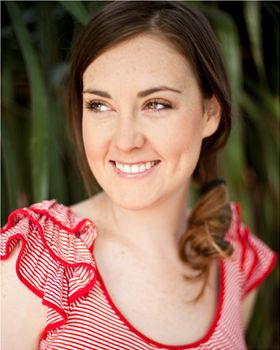
  Amy Lehpamer not with chicken pox.

  I haven't made a big deal about my stroke recovery in any of the media interviews I've done, but the fact that you're reading this blog suggests that you might already know about it. For the moment, I think that one of the best things you can do to aid stroke recovery is keep busy, find a group of energetic people to be busy with, and put on as musical. I realise this remedy may not be readily available for all stroke survivors. I'm particularly fortunate in that regard. It all started when I volunteered to work on the musical Call Girl last year. Call Girl is a musical written by my friend Tracy Harvey. It's about love and laughter in a call centre. Tracy actually worked in one of these places for a short while. YOu have to harden up. Most people you 'cold-call' really don't want to talk with you, and you might have dragged them away from something important, such as Letters and Numbers or dinner. It was interesting for me to go from an experience of dreading the call centre calls, to a position where I couldn't wait for them to ring me, so that I could plug our show. I think I must be the only person who ever managed to 'sell' anything to a call centre caller. Tracy kept a notebook full of the adventures of working in the call centre, and came up with a clever script where it was possible to sympathise and even cheer for the 'phonies', after all, they were human beings like you or me, who had, in many cases fallen on hard times. One of the best experiences of working on Call Girl was getting the chance to work with director Bryce Ives.


 Director Bryce Ives with the fabulous Tracy Harvey 

Bryce is 28 and one of the most dedicated people I have ever met, somehow making himself available to deal with the concerns of cast and crew (and there were plenty) while somehow keeping the whole vision of the show together. Our cast (with the exception of Tracy) were all fairly new to the business, but Bryce brought out the best in them all and the end production was slick and funny. I hope we get a chance to do it again.

After seeing how well Bryce brought together the various components of Call Girl I decided to show him the remnants of a script and some songs I had written for the Margaret Fulton musical. There have been a lot of bio-musicals lately, as well as some that take inappropriate subject matter and turn it into a musical, so the biggest joke is that someone has gone to the effort of producing a whole musical about the life of Shane Warne, or a dystopian world called Urinetown, where water is scarce and lavatories may only be used if a substantial fee is paid to the corrupt company (Urine Good Company) that runs the town. The trouble is, unlikely subject matter that is often the only joke, and what might have worked well as a two minute joke on The Simpsons (they've already done parody-musicals based on The Planet of The Apes and also A Streetcar Named Desire, to name but two) flounders when it reaches the midway point. I haven't seen Warne, so I don't know if this criticism applies, but I did see Urinetown, and also the musical about Jerry Springer, and it was hard for me to last the distance.


Margaret being a 'celebrity chef'- a term she hates. She will not be taking part in future seasons of Masterchef

I'd met Margaret Fulton - the 'celebrity chef' - while doing some research on a TV program proposal for Steve Vizard's production company. Margaret and I spent a morning together. Margaret was, and is, phenomenally entertaining. Conversations with Margaret often collapsed into giggles as Margaret would suddenly go off on a tangent, recalling an anecdote that might involve Germaine Greer or Jorn Utzon or any other artistic, political and literary celebrities of the fifties and sixties. Margaret, you see, had a knack of being in the right place to commune with the great and near-great. It helped, of course, that she was strong-willed, intelligent and courageous. Margaret was the first female business executive in Australia, with her own line of credit. The musical recreates some funny but true moments where male executives have underestimated Margaret, or even mistaken her for a 'lady of the night', which once happened during a business trip to Canberra. After I met Margaret I was determined (though not driven) to create a musical about her life, since the performing arts had been such a major part of it. This was, I think, before Casey Benetto did such a good job with his musical about the life of former Australian prime minister, Paul Keating. I think one of the reasons Keating worked so well is that Casey put a lot of heart and soul into the script. It wasn't just funny (fantasically so) it was also moving and a fair representation of a full political life. I wanted to make the Margaret Fulton musical a genuine biographical piece with music of the various periods of history that Margaret's life spanned.

A typical Margaret Fulton pic from the early sixties. You can tell she's a communist, can't you?

When Adam Cook, the artistic director of The State Theatre in Adelaide asked me if I had any show ideas (we had just finished working together on the Midnite musical), I mentioned the Fulton project and he burst out laughing. He thought I was proposing yet another of those inappropriate subject matter joke-musicals. To give people an idea of what I really wanted to do (and Margaret was yet to give us her blessing - she has now) I thought the best thing would be to put together a collection of songs to demonstrate the sweep of the project. I bought the rights to Margaret's autobiography, and the first song I wrote was a huge thing called The Book. It's a song about Margaret's first cookery book, which broke all records by having an initial print run of one million. That's the story, anyway. I don't quite know how it is possible to do such a massive first print run unless you are, say, doing the latest volume in the Harry Potter series. But Margaret insists that Paul Hamlyn, the famous semi-teutonic publisher and patron of the arts commissioned an initial print run of a million - when there were only about eighteen million people in Australia. (This gives you an idea of how popular Margaret Fulton was in the fifties and sixties, when she was contributing to Woman's Day and New Idea, as well as appearing on the exciting new medium of television. I suppose if anyone could do a primary print run of one million, then Paul Hamlyn, with all his Asian printing connections, could. There's a song about him in he show, and we've delighted in presenting him as the King of Colour, a sort of pop-art swinging guru that would be quite at home in The Beatles' movie, Yellow Submarine. And we've placed him right at the heart of swinging London, where Margaret did dozens of highly successful book signings (although people weren't queueing around the block as they did at the Australian signings). So the first song I put down with Yuri was a massive rock opera piece about this massive book that introduced bland Australian cooks to such novelties as garlic and Indian spices.

Australia really was somewhat insular in her cookery tastes. Never mind that we were in the middle of the pacific, but we based our menu on English rather than Asian tastes. Exotic herbs like cumin or cardamom were barely heard of. But Margaret Fulton's cookery book introduced Austrtalian men and women (okay, mainly the women) to a myriad of new flavours and exotic methods of food preparation. Readers of The Women's Weekly lapped it up, and Margaret's book became the cornerstone of modern Australian cuisine. All the while, Margaret was presenting a fairly conservative image to the readers of the women's magazines. Most photographs of her featured her presiding in a matronly way over wonderful spreads of food; exotic, spicy food that the readers could make for themselves. But Margaret's seemingly conservative image was at odds with her true self. Fiercely independent, she set out to create a career for herself in Big Bad Sydney (she was born in Scotland but spent her childhood in Glen Innes, in rural New South Wales). Margaret had a young daughter from her first marriage, which broke up fairly swiftly when both parties realised they didn't share a lot in common. Thus, Margaret became a 'rebellious' single mum (there weren't so many of them back then) who decided that the best, most convenient place to live would be in the famous, sometimes derided 'Rocks' district of Sydney, right near the south end of the bridge.

The Rocks. It used to be rough, now it's a repolished gem, a bit like my beloved St Kilda.

Margaret's friends were her fellow tenants; a lively mixture of actors, artists, writers and musicians. The show features a big song called La Vie Boheme, or The Bohemian Life, which was very much the life that Margaret lived when she wasn't working in the ACP building on one of the magazines. Margaret's daughter Suzanne is on record as saying that she thinks her mother had poor taste in men. They were always good-looking and 'interesting', but they were sometimes dishonest, even predatory. I wrote a song called Decorative, Elegant and Useless, which strives to encapsulate Suzanne's opinion of her mother's ability to hook up with disastrous men. I wrote two more songs, one piece to encapsulate Margaret's energetic philosophy of life. It's called I Sang for My Supper. My favourite song in the show is about a 'Bohemian' character called Mandrake the Magician, a female legal eagle who attended one of Margaret's many custume parties, dressed as the male cartoon superhero Mandrake, and promptly had an affair with Margaret's husband at the time, Denis Doonan.

Leave her alone! Mandrake the magician bravely threatens an evil spaceman

With the bare bones of a script and a CD of six songs I pitched the idea to Margaret. I wasn't quite sure how she would take it, but it was a good pitch. Yuri Worontscak produced the songs so that they were technically of a high standard, and we had good singers such as Mark Trevorrow and Shaun Micallef performing the lyrics. I sat and listened to these songs with Margaret, having to translate a few lines because Yuri, like many musical producers, thought the music was more important than the lyrics and the balance was wrong. Lyrics disappeared in lilting seas of music. I was most concerned about the Mandrake song, since it dealt with such a personal part of Margaret's life. But I was rapt when Margaret smiled at the end of it. 'She was exactly like that,' Margaret said, especially in relation to 'Mandrake's' line that the reason she always worked so hard on being a superhero was that she 'couldn't find love'.

Imagine being cheated on by Mandrake. Spiderman you'd understand, but Mandrake?

So, Margaret apparently liked the songs and when she decided she could trust me, she let me go ahead with writing the musical.

Our cast, gathered in Bryce Ives' kitchen, where many of the rehearsals took place.

It's punishingly hard to produce musicals anywhere in the world, let alone in Australia, so I suspected we would have to give it to one of the local theatre companies to present as part of their season. It wasn't a vast production, just a sort of chamber piece with five performers and a small band. Yuri and I shook hands on the production and we took it to Simon Phillips, who was then the artistic director of The Melbourne Theatre Company. At the time they were presenting the musical Urinetown, which both Yuri and I had seen but not enjoyed terribly much. Sadly, Yuri mentioned this to Simon. I've always found that to gain the support of a person of influence, it's often a good idea not to tell them you think their work is crap. But Simon remained very encouraging, and wondered whom I had in mind to play the title character. I'd just been working with Gina Riley on the Kath and Kim series, so I suggested her - good-looking, fantastic comic timing and a magnificent singing voice. Who could be better? This came as a bit of a surprise to Yuri; we hadn't even discussed this, but Simon liked the idea very much and told me to finish it. Some money even changed hands, though I don't recall how much. There was certainly no promise of the MTC taking it on as one of the shows in their latest season, but Simon Phillips' encouragement and money inspired me to write a whole first act, which I sent him.
 Our cast again. it seems likely that our set will resemble a working kitchen. We have permission to cook stuff during the show. In the last rehearsal I attended, there was much chopping of vegetables and fiddling with pots. It was a little distracting and it will be tidied up for the final production, but I did rather like the fact that at the end of the show, the cast sat and ate what they had made. No food wastage here.

 Simon was still kind and supportive, but by this stage he had decided he no longer wanted to perform the role of the MTC's artistic director. So, we had a show but nowhere to present it. It gathered dust for a few years. I showed it to Bryce Ives at some stage and gave him a copy of the CD. I remained in contact with Margaret, and made sure that she got invitations to some of the other Sydney shows in which I had played a part. I was glad Margaret came to The Clockwork Forest at the Sydney Theatre Company, because I think that show is the most faithful rendering of my writing. She also saw the Belvoir Street production of Snugglepot and Cuddlepie which I adapted with John Clarke. I remember a ludicrous, plump arts administrator complaining about the script that John and I had written, stating that it was 'little more than a satire on Australian iconography'. This overwhelmed me. If you commission Australia's best known satirist to write a show then complain that it's satirical, it's a bit like buying a cherry ripe then complaining because there appear to be cherries in it. It wasn't a good experience, because of Sydney theatre politics, though I very much enjoyed working with John.

The incomparable Keating, The musical. We were working on the Margaret Fulton show before this mini-masterpiece appeared, and it was an inspiration. 

Simon Phillips was also in the opening night audience of The Clockwork Forest. I did passingly mention to him that I still had this musical about Margaret Fulton which by an extraordinary coincidence, was holding my hand. I don't know if Simon had lost interest in the project, but he nodded and moved away to chat with a painting. Margaret joined me at the bar. I should have bought Margaret a whiskey and water as I know this is her preferred tipple, but we both downed some white wine while I was eager to hear what Margaret thought of the show. She said that the design was very good - and it was. But, of course, it's not what the writer wants to hear. In the end, Margaret said something polite and kind about the script and I farewelled her as she climbed into a cab and rode back to Balmain.

 The elegant Brink/STC production of The Clockwork Forest, directed by Chris Drummond.

What happened next is I had a stroke. I woke up one morning unable to feel any sensation in my hands, except for a sort of pins and needles feeling in my fingertips. I couldn't talk properly because my mouth drooped down on the left side and I seemed to have developed a slight limp. I journeyed to the local medical centre and they were very adamant that I had to get to a hospital as soon as possible. I really didn't believe I was having a stroke. To me, my voice sounded fairly normal, though I've since been assured that it didn't. I spent a few weeks in hospital, and when I was discharged I looked around for something to do. There was a book I wanted to write, and I've blogged about that elsewhere. I was at a bit of a loose end when Bryce Ives rang, as enthusiastic as ever, saying that he definitely wanted to get the Margaret Fulton musical happening and that there might even be some funding from Port Philip Council and local company Theatreworks. All I had to do was finish it.

 Director Bryce Ives, very much at home with a microphone.

Yuri Worontscak and I signed on, and Yuri patiently helped me with all of the new songs we had to write. (I thought that a quick way of writing songs would be to compose new words to fit already establish melodies, but fortunately Yuri didn't like that idea. He was very good at doing 'soundalikes' and had gained a reputation for doing the song parodies on shows like Fast Forward and Full Frontal. His work sounded just different enough from the original to keep him out of the law courts. But Yuri was keen to write some brand new stuff, not the old soundalikes. We worked hard on eighteen more songs. (When you've had a stroke, it's a good idea to work with a friend, because the chances are you'll come up with some stupid ideas, and only a really good friend would be brave enough to point out just how abysmally stupid those ideas are.) Bryce kept on at me to finish the script, so he could cast. I decided that whoever played the lead had to be a comic performer, not just a singer, because there were quite a few jokes in the show. Eventually we had a table reading of the script in the dungeons of the old National Theatre in St Kilda. I recognised a few faces from the old Call Girl prduction - choreographer David Harford and singer comedianne Laura Burzacott. Laura was a perfect fit for the show and did such a good job reading a Rocks character called Bea that I immediately went off and wrote a lot more scenes for her.

 The amazing Laura Burzacott who will be playing the role of Bea in the show. I don't see how someone so talented can seemingly appear out of nowhere. She hasn't taken a singing lesson in her life, but she has perfect pitch and can give the songs a lot of energy. Though I irritate her when I make the lyrics too wordy.

Gina Riley was unavailable to play Margaret Fulton, on the grounds that she'd just made a movie that she was rather keen to promote (I'd worked on the same movie, so I understood.) Wendy Harmer said she was interested, and for a while it looked as though Wendy would be Margaret Fulton, but there was a clash with another big TV gig she was doing. Neither Gina nor Wendy had complained about the pathetically low remuneration we were offering. Maybe they were just being polite? But I think they were genuinely interested in playing such a wonderful cahracter as Margaret. There aren't that many Australian musicals with such a strong female character. Eventually Bryce cast Amy Lehpamer, as he'd just seen her in the retro musical Rock of Ages and she'd been very good.

The rest of the cast sort of fell into place. Both Laura and Bryce could make a good living as talent scouts. They seem to know everyone funny and musical and - gasp! - affordable, working on the fringes of Melbourne Theatre. Producer Sean Bryan came on board to help Bryce and organise funding drives. He's young, but has an incredible list of credits from working on shows all over the world.


:
Sean Bryan seeking donations for Margaret Fulton Queen of the Dessert. How could you say no to this face?

The script and songs have been through countless rewrites. We manage to cover three decades of Australian history from 1988 on. We sing cautious love songs about pressure cookers and - recently removed - a song that refers to Margaret Fulton's brief flirtation with the communist party in Australia in the fifties. I thought it so surprising the Margaret, who to me represented a fairly comfortable, domestic cosiness should be involved in leftist politics, that I wanted to call the show Margaret Fulton: Communist. But Margaret didn't like that idea at all. She joined the party when she agreed with communism's more noble ideals of nobody being forced into poverty,  but Margaret later told me that Stalin had let her down very badly, and that Russia was the one country she was never likely to visit. Yuri came up with the eventual show name Margaret Fulton - Queen of the Dessert. So that's what it's called, for the moment. One of the best songs in the show is about jam, which was Margaret's solution to a huge Australian sugar surplus, thanks to some overly generous subsidies from the Menzies Government to cane farmers. This song was also on the original presentation CD. I now want to  call the show Margaret Fulton's Jam, since that seems to trip off the tongue nicely. If we do ever get the show to Sydney, I'd hope that the same cast and crew could be involved, since we all worked together to make the idea of the Fulton show a reality. But first we have to get through our premiere season at Theatreworks in St Kilda.

Heartfelt thanks to anyone who donated to the project via the Pozible site. See you there!

Saturday, October 20, 2012

Complications

Dad eating chocolate with his twin sister Florence, about seventy years ago. Chocolate consumption was to become a lifelong hobby.

My dad's heart operation went okay and he has been transported from Geelong to a hospital in Ballarat. But we now have another problem. Dad managed to get a stroke (just like me), so now we can talk with each other about the experience. I think that, generally, dads get strokes long before their sons, so this is an interesting inversion. He felt very sick in the middle of the week and when I learned the symptoms, I actually knew what was wrong. (I know so few things about the world that I am delighted and staggered when I can offer some advice borne of experience.) Dad's on the same bloodpressure-lowering drug that am. It's called Karvea, and I found that it made me feel sick and incredibly sleepy, because my dosage was too high and my blood pressure had dropped below a hundred, where it had been just over two hundred, prior to treatment. Dad was experiencing exactly the same thing as I did, and I suspected for the same reason. I wonder what the correct protocol is, when you are pretty sure you know what is wrong with a patient but have had no medical training? Should you seek the attention of a nurse and tell them what you think is wrong with the patient and why? From experience, medical staff hate this sort of intervention, as much as a writer would hate someone telling him what's wrong with the words he has written, by someone who hasn't ever written a book in their life. But hang on, that's how my life works. And if the critic is wrong (they usually are) all that happens is I feel miserable for a few hours. I don't actually die. So why be a coward?

In the end, my little sister (who's had quite a lot of experience with medical staffwas brave enough to inform the ward sister that she had a fair idea of what was wrong with Dad, since her stupid and neurotic big brother had just suffered a similar experience. Sniffily, they reduced the dosage of Karvea and Dad felt well again.

Dad can't drive or talk properly and he's always sleepy, but can't sleep. He also finds it hard to read and work.  My father and I have more in common than ever. I already love him, but perhaps the
shared stroke will bring us closer together?

Here is my dad fishing with his dad, a long time ago. Both are probably thinking they will never get cancer or strokes. Both, I regret, are wrong.


Musings on Sequels

 
It's been a year now since I had the stroke but I'm still finding it very hard to work. If you want to hear how I'm talking at the moment, go here. It might sound normal to you, but this is nothing like how I used to speak. By the way, my two friends Amy and YUri did a lot of speaking, even though they do not feature here. There are alternative edits of film, which will be released on facebook.


Not quite sure where my career will be going next. Writing is punishingly difficult and I'm still not as sturdy on my feet as I would like to be. It was very hard to write the sequel to my Body-snatcher book, and it looks as though Penguin are tentative about publishing it. So they should be, the original received an honour in the CBCA awards and a shortlisting in The Victorian Premier's Awards so obviously the book is a piece of crap that should never have been exhumed. Now I'm in a quandary. It took at least four months to write that sequel. It's about sixty thousand words long. What do I do with it? Is it appropriate to show it other publishers? The manuscript is now in the hands of my personal friend and editor extraordinaire, Dmetri Kakmi. I don't even know if the book is any good, since I wrote it while I was still in rehab from the stroke. I know that dmetri won't hold back with constructive criticism.

Meanwhile here is a picture of the glorious Amy Lehpamer (the pretty one in that movie with me plugging the play, who not only has the best pair of legs in the business, but also possesses a stunning voice and will be playing the title character in the musical,
Margaret, Queen of the Dessert.